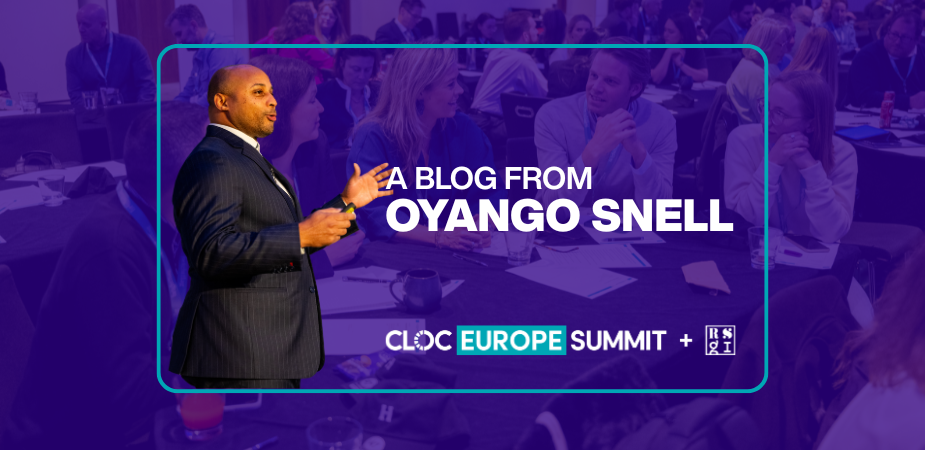
Last month, I spent time with our legal operations community at the 2026 CLOC Europe Summit in London. This week I’m in New York for Legalweek, where many of the same conversations are unfolding again on stage and in the halls.
The same signals are emerging on both sides of the Atlantic, echoing themes we highlighted earlier this month in CLOC’s 2026 State of the Industry Report in partnership with Harbor.
Across exchanges with in-house leaders, technologists, and legal innovators, many conversations pointed to the fact that legal operations is reaching a new level of operational maturity.
That maturity is emerging during a demanding moment for corporate law departments. Regulatory obligations continue to expand. AI is changing legal workflows. At the same time, organizations expect greater value without equivalent growth in headcount or budget.
Legal operations leaders are responding by bringing operational data and structured decision-making into conversations that used to happen on instinct.
Legal Ops Is a Business Advisor
Legal operations is increasingly influencing executive decision-making. Ops professionals use operational metrics such as cycle time, risk exposure, and outside counsel spend to help leaders understand the impact of legal resource decisions. These insights are changing discussions with finance and senior leadership, as legal departments present clear operational choices and trade-offs that connect legal activity to business outcomes.
AI: Moving Beyond Experimentation
AI dominated the dialogue at the Europe Summit, though the focus has shifted from experimentation to day-to-day operational use. Organizations across Europe are embedding AI into everyday workflows, including contract review, knowledge management, and risk analysis. Successful programs require governance, structured pilots, training, and measurement of business impact. Technology expands access to information, while lawyers and operations leaders continue to provide the judgment, oversight, and accountability that effective and responsible adoption requires.
Capacity Pressures Are Driving New Operating Models
Demand for legal services continues to increase across regulatory, privacy, and contracting areas, while most departments expect staffing levels and budgets to remain largely flat. Legal operations leaders are helping departments rethink how work is delivered, using data to prioritize activity, redesign service delivery models, and clarify what internal counsel can realistically support. This approach shifts planning away from reactive resourcing toward deliberate operational planning.
Transformation Still Starts with People
Technology remains a major focus, yet participants repeatedly emphasized that meaningful transformation still begins with people and processes. Adoption often follows visible operational improvements. Momentum builds when organizations demonstrate practical gains such as faster contract turnaround or clearer intake processes, allowing innovation to become part of everyday work.
Legal’s Emerging Role: Building Trust in an AI-Driven Environment
One discussion in London focused on the evolving role of legal professionals as stewards of trust. Generative technologies increase access to legal information, while organizations still require systems that validate outputs and ensure responsible use. Legal operations helps establish those systems through governance frameworks, greater transparency into legal work, and responsible technology adoption.
A Discipline Pointing the Way Forward
Just before Legalweek wraps, I’ll be catching a red-eye to Amsterdam to join CLOC regional leaders Sean Houston and Antonello Gargano to host our CLOC Connect: Legal Ops Impact Series in the Netherlands, on March 12. Sean and Antonello were also with us in London, and I’m looking forward to continuing the conversation with them and meeting additional leaders from in-house teams, law firms, legal technology companies, and ALSPs.
The session will focus on what is working today, where expectations diverge across the ecosystem, and how organizations measure impact in legal operations.
I’m excited to carry those insights forward as the global community gathers again at the CLOC Global Institute in Chicago, where legal operations professionals from every region come together to exchange ideas and shape what comes next for the profession.
For more insights from the Europe Summit, download the full report.